News
The 8th Meeting of the Seas calls for putting a price on the value of marine life in order to protect it
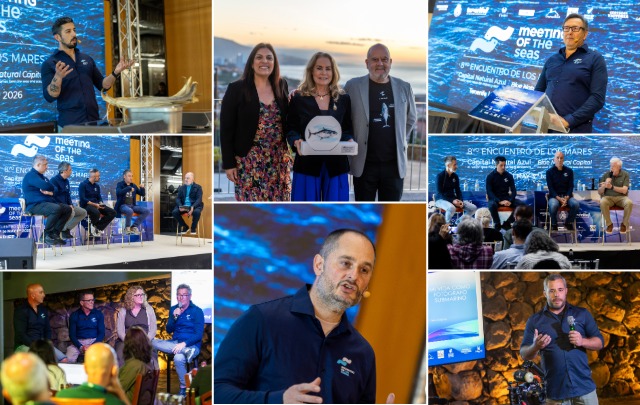
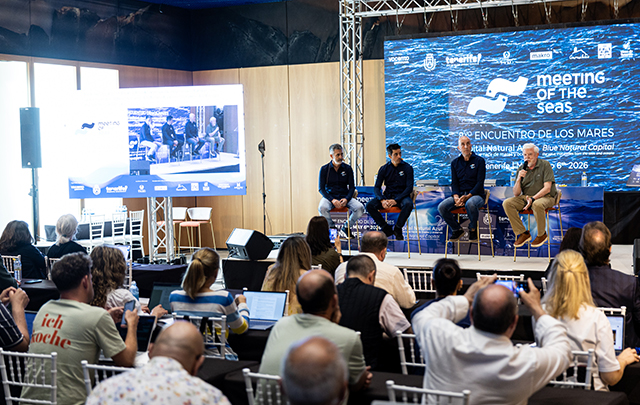
Since yesterday and through May 6, the island of Tenerife has been hosting scientists, fishermen, and chefs at the eighth edition of Meeting of the seas, the only international conference that brings together scientific knowledge, fishing culture, and haute cuisine under one roof. Under the slogan “Blue Natural Capital”, the first day focused on the value of the oceans as a driving force for life, the economy, and food, without shying away from the urgent challenges threatening their conservation.
The opening ceremony set the tone for the event. Lope Afonso Hernández, Vice President of the Tenerife Island Council, emphasized that talking about the ocean means talking about “our great blue treasure” and our collective responsibility to preserve it. In the same vein, Benjamín Lana, CEO of Vocento Gastronomía, called for “viewing the sea with common sense and from a holistic perspective,” noting that all too often we live “with our backs turned to it.”
One of the key moments of the day came with the presentation by scientist Carlos Duarte, who brought to the table a concept as uncomfortable as it is necessary: marine natural capital. “Nature is an asset that generates economic benefits; that is why it is capital,” he explained, pointing out the great historical gap: that value has never truly been incorporated into the market. From this, he noted, stems in part the so-called “tragedy of the commons,” where ocean resources have been exploited without clear limits.
The figures he shared do not inspire optimism: since the 1970s, 55% of marine species abundance has been lost. For Duarte, the key lies in marine life acquiring a tangible value that allows it to be regulated and protected. And he cited examples that are already working: tourism linked to sharks or whales generates more revenue than their direct exploitation, while initiatives like blue carbon have begun to attract private investment to regenerate ecosystems such as mangroves.
Beyond the data, the scientist sent a direct message to the business community: repairing the damage is also the responsibility of those who have benefited from extraction. And he closed with a reflection that resonated throughout the room: “What we need to repair is not just the climate, but the foundation of humanism that unites us.” From the European Commission, the deputy head of the Blue Economy Sectors, Aquaculture, and Maritime Spatial Planning Unit at the Directorate-General for Maritime Affairs and Fisheries, Lorella de la Cruz, addressed the role of maritime planning and aquaculture, emphasizing that “land-based food production is at risk, making it essential to look to the sea.” She described aquaculture as “a traditional sector but one undergoing rapid innovation, with economic, social, and environmental benefits,” though still limited by administrative barriers and a lack of public awareness. “It accounts for only 0.7% of global production and covers 20% of consumption in the EU,” she explained, pointing to challenges such as climate change, the energy transition, and generational succession.
From sports to activism: a life dedicated to the sea. Theresa Zabell, 2026 Sartún Award
Two-time Olympic champion Theresa Zabell, this year’s recipient of the Sartún Award for her work in defending marine ecosystems, moved the audience with a speech focused on learning and overcoming challenges, applying the values of elite sports to the defense of the ocean. “The most important thing isn’t the goal, but what you learn along the way and what you do with that learning afterward,” she noted, breaking down her well-known metaphor of the five rings—dream, challenge, team, strategy, and luck—as the pillars of success. After his retirement, he explained how he redefined his life’s purpose around the sea: “It has been my playing field, but seeing it filled with waste made me realize I had to step up and take action.” Through the Ecomar Foundation, he promotes education and awareness, reminding us that “the future of humanity lies in a healthy ocean” and that “we have time to change, but it won’t happen by chance: we must all get involved.”
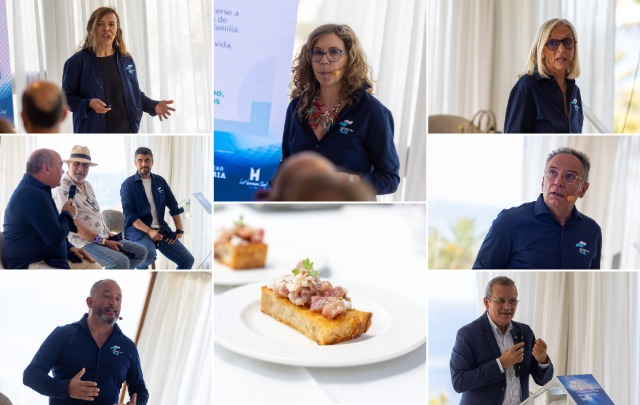
Ingredients, memory, and creativity: the sea is cooked from its source. Cuisine has served as a vehicle for reflection during a day where product, technique, and message have gone hand in hand. The three-Michelin-starred French seafood chef Alexandre Couillon, chef at Marine & Végétale*** (Noirmoutier-en-l’Île, France), presented his iconic Ostra Erika, “a dish with emotion” created to keep alive the memory of the Erika oil tanker disaster in 1999. Submerged in a black squid ink broth that evokes the oil spill, the dish combines visual impact and purity of flavor to remind us of “the fragility of the marine ecosystem and the need to never forget.” From Norway, Carlos de Medeiros, chef at Bar Amour* (Oslo, Norway), presented his Nordic dashi, made from cod bones and heads transformed into a clean, deep gelatin, which he paired with raw shrimp, oyster emulsion, and elderflower vinegar. A creation that encapsulates his philosophy: “adopting techniques from abroad and transforming them with local ingredients to adapt them to your environment.”
Sardines, mackerel, and horse mackerel were the focus of a roundtable discussion in Tenerife on these popular fish, examples of the humble luxury of the sea due to their cultural and nutritional value, in a concerning context: Spain has seen a 50% drop in per capita fish consumption, falling out of the global top 10 with just 22 kg per person per year—a decline that particularly affects smaller oily fish despite their higher nutritional quality compared to species like farmed salmon or hake, whose consumption has skyrocketed. Faced with this situation, Josean Alija, chef at Nerua* (Bilbao, Spain), has warned that “people have stopped cooking at home and young people are losing that connection with the product,” while Javier Olleros, chef at Restaurante Culler de Pau** (O Grove, Pontevedra, Spain), has argued that “they should not be seen as substitutes, but rather elevated with creativity and given the value they deserve.” Along the same lines, Iván Domínguez, chef at Nado (A Coruña, Spain), has emphasized that “the backbone of our menu is small bluefish,” championing their role in accessible, culturally rooted cuisine, and Erlantz Gorostiza, chef at M.B** The Ritz-Carlton Abama (Tenerife, Spain), insisted that “what is not talked about ceases to be consumed,” calling for greater education and awareness to preserve food diversity.
Haute cuisine of the sea: territory, scarcity, and shared responsibility
The event concluded with a reflection on the present and future of haute cuisine of the sea. Aitor Arregi, chef at Elkano* (Getaria, Gipuzkoa) and the Cataria restaurant (Chiclana de la Frontera, Cádiz), has advocated for a cuisine deeply rooted in the territory: “in a dish, you share a landscape, which is why we must defend it,” committing to “reconnecting with nature and understanding seasonality through our proximity to the sea.” He also emphasized the importance of conveying culture and knowledge to diners: “Everything is culture, and our job is to represent it in the best possible way.” Pablo Sánchez, chef at Los Marinos José (Fuengirola, Málaga), addressed the reality of the market: “There is more demand than product, which drives up prices,” noting the need to adapt without losing the traditional foundation and adjusting the menu on a day-to-day basis.
For his part, Berto Domínguez, chef at the restaurant D’Berto (O Grove, Pontevedra), advocated for a cuisine where “what matters is the product, not the preparation,” explaining that in the face of scarcity, they have chosen to “buy less and maintain quality, even if that means offering smaller portions,” committing to educating customers about the true value of the sea. All of them agreed on a shared vision: the future of seafood cuisine depends on respect for the product, the defense of the local area, and greater collective awareness of the ocean’s limits and riches.
The afternoon session featured the fishermen, who took center stage at a roundtable discussion that brought together Roberto Rodríguez Prieto, manager of Artesáns da Pesca (La Coruña); Sebastián Martín Sánchez, biologist and owner of the restaurant Chichín Puerto (Caleta de Vélez, Málaga); and Manuel Díaz, head of the Los Cristianos Fishermen’s Guild (Tenerife). All three expressed concern about the lack of a new generation of fishermen in the sector, a challenge that threatens the continuity of traditional fishing. The day concluded with a moving tribute to underwater photographer Sergio Hunquet, who passed away in Tenerife three months ago; his son accepted the Sartún de Honor in recognition of his career. Earlier, fellow underwater photographer Yeray Delgado delivered a brilliant presentation focused on the invisible value of blue capital.
From the sea to the plate and to the planet: the key themes for the second day
Promoted by the Cabildo de Tenerife, through Turismo de Tenerife and its brand Tenerife Despierta Emociones, the Meeting of the seas conference reaffirms the island’s commitment to leadership in blue gastronomy and the protection of marine resources. This is evidenced by its comprehensive program, which tomorrow will continue to delve into the major challenges and opportunities of the ocean from a multidisciplinary perspective.
Researcher Ana Fuentes will address the role of the sea in global food systems, connecting tradition and the future as “a space of infinite possibilities.” From the United States, Patti Schaefer and Ann Golob will analyze lessons from the Mediterranean in aquaculture, offering a practical perspective on the sector. Haute cuisine will return to the spotlight with a roundtable on new horizons in seafood cuisine featuring Pablo Vicari, Gil Fernandes, Benito Gómez, and Diego Schattenhofer, while science will focus on ecosystems with Núria Marbà, who will analyze seagrass beds as natural capital. The blue economy will take center stage in Sandra Damijan’s presentation, and the role of marine reserves in conservation and fishing in Tenerife will be addressed by Alberto Brito Hernández. The day will conclude with a sensory exploration of seafood featuring chef Jacopo Ticchi and his presentation “What Does the Sea Taste Like?”
Related news
News
Tenerife wraps up the 8th Meeting of the Seas with a resounding message: “The sea is worth so much more alive than dead”
News
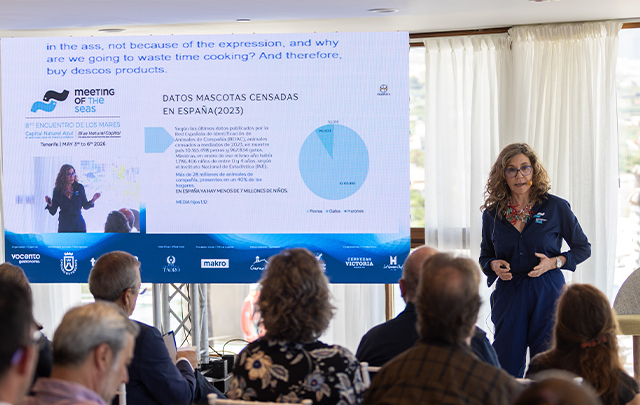
The Challenge of Fish on Spanish Tables: María Luisa Álvarez’s Call to Revive the Culture of the Sea
News

Ciguatera: An Emerging Threat in the Canary Islands
News
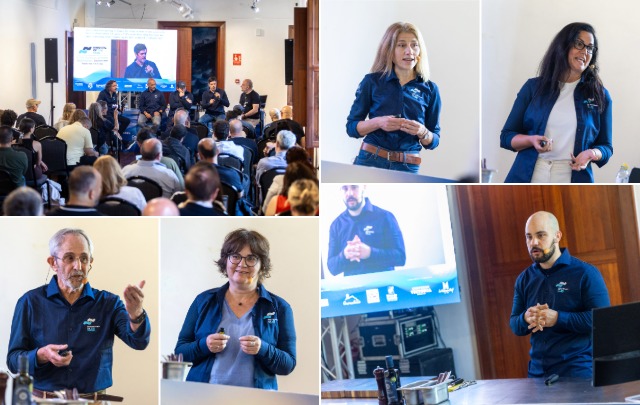
The “Meeting of the seas” conference puts a price tag on the oceans in Tenerife: they generate $2.2 trillion and shape the future of food
News
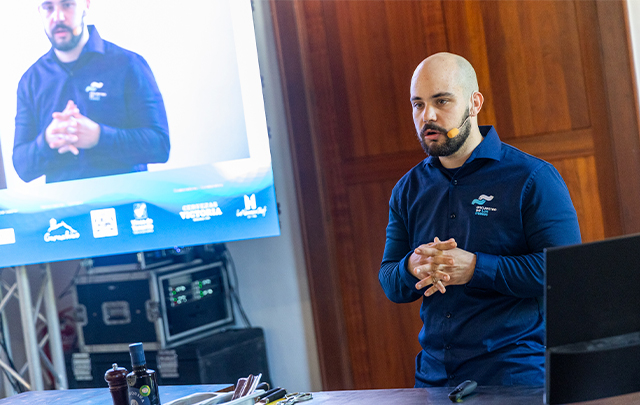
Rethinking the taste of the sea through memory and sustainability
News
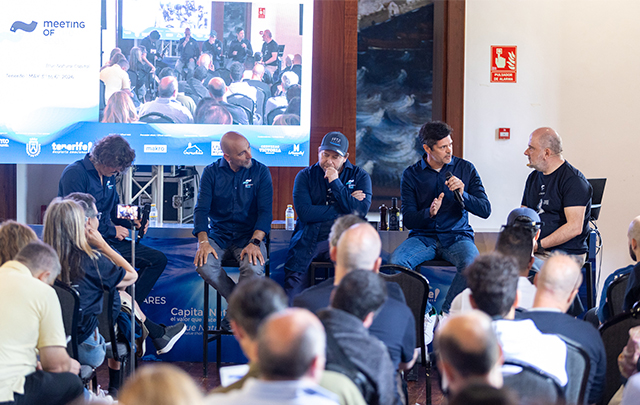
New horizons in seafood cuisine: authenticity, sustainability, and creativity from the Atlantic to the Mediterranean
News
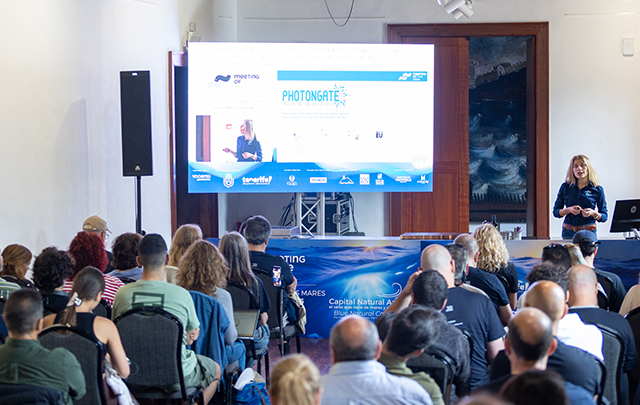
The Science Behind the Taste of the Sea: Ana Fuentes and the Sustainable Revolution in Seafood
News
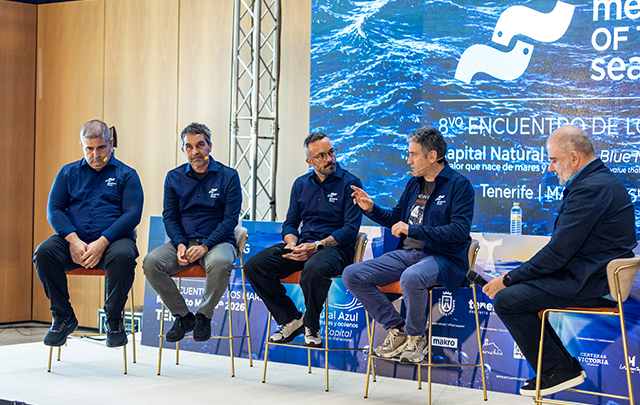
The luxury of simplicity
News
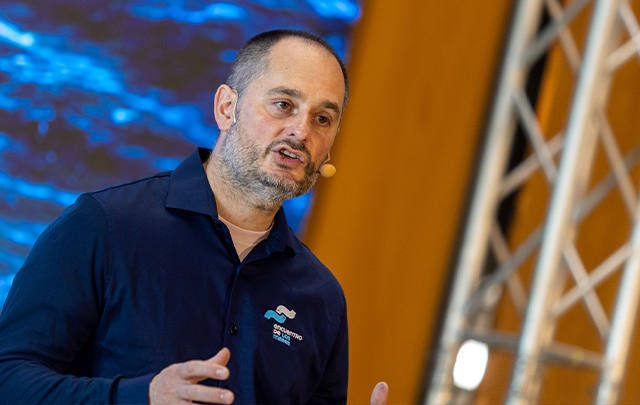
Alexandre Couillon: the memory of the sea on a plate
News