News
The “Meeting of the seas” conference puts a price tag on the oceans in Tenerife: they generate $2.2 trillion and shape the future of food
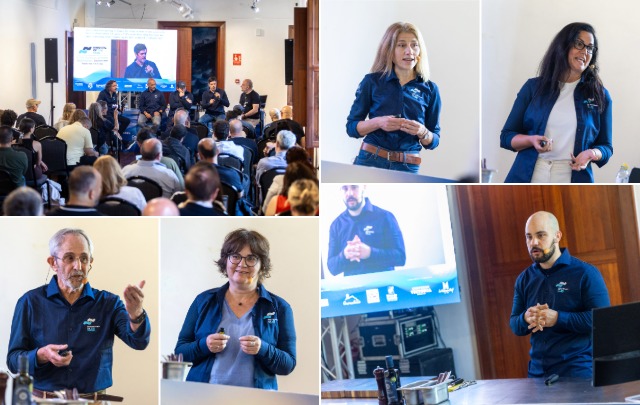
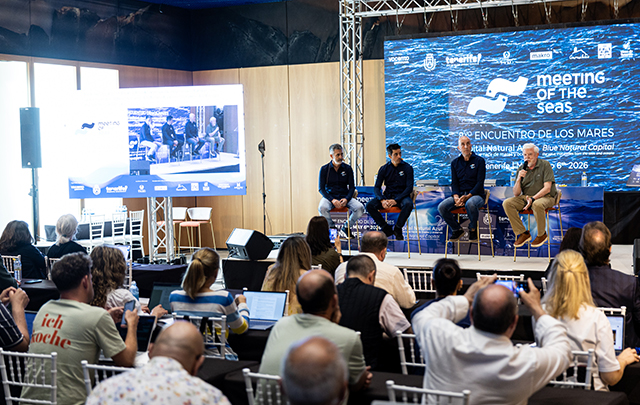
The debate on how to feed the world from the ocean took center stage today during the second day of the 8th edition of the Encuentro de los Mares conference being held in Tenerife. From the blue economy to haute cuisine, the presentations traced a path connecting science, products, and sustainability.
The future of food depends directly on blue natural capital, according to economist Sandra Damijan, a professor at the Faculty of Economics and Business at the University of Ljubljana (Slovenia), who emphasized that marine and coastal ecosystems not only sustain food production but are also essential pillars of economic development and long-term sustainability. Damijan argued that “Blue Natural Capital is nature that generates economic value for both the restaurant industry and national and global economies,” insisting that “a living ocean creates more value than a degraded one.” To illustrate this, she cited specific examples: mangroves protect more than 210 million people, and species such as sharks generate significant revenue through wildlife tourism.
“The ocean is part of our economic system, but we are neglecting and destroying it,” the expert warned, calling for a shift in mindset that involves more efficiently managing an ocean economy “that generates millions of jobs and exceeds $2.2 trillion.” In this context, she highlighted the role that all stakeholders must play: “chefs transform natural capital into market value; policies must regulate and incentivize best practices and incorporate this capital into government accounts; and it is necessary to increase public and private investment.”
Cooking the Sea: Tradition, Technique, and New Species on the Plate Chef Jacopo Ticchi, chef at Da Lucio* (Rimini, Italy), has explored the culinary identity of the Adriatic from a contemporary perspective, where tradition, sustainability, and innovation come together in every dish, championing a deep understanding of the product and techniques such as fish aging to reinterpret the flavors of the sea.
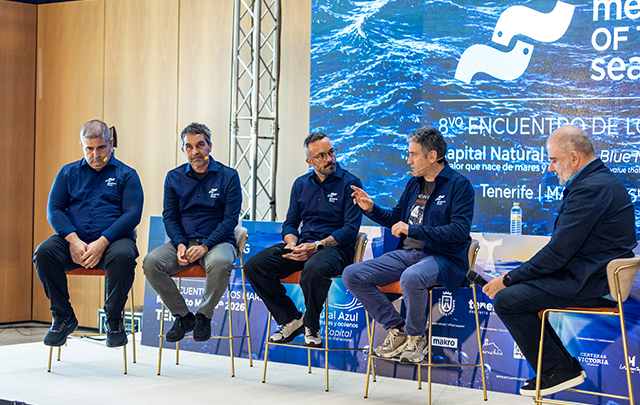
New horizons in seafood cuisine have also been explored. Pablo Vicari, chef at Elkano* (Getaria, Gipuzkoa) and Cataria (Chiclana de la Frontera, Cádiz), has advocated “bringing the culinary landscape to the table and educating the customer about new species,” championing a cuisine in harmony with the environment, because “aquaculture can relieve the sea, but the sea cannot be the food for aquaculture.” Gil Fernandes, chef at Fortaleza do Guincho* (Cascais, Portugal), has championed locally sourced cuisine: “we serve what we see from the restaurant,” favoring seaweed, halophytes, and a greater diversity of species over intensive aquaculture. Benito Gómez, chef at Bardal** (Ronda, Málaga), noted that “combating invasive species by eating them is a good strategy if they taste good,” while also acknowledging the economic reality of the sector: “a restaurant is a business, and fish farming is a viable alternative that is consumed.” From Tenerife, Diego Schattenhofer, chef at Taste 1973* (Arona, Spain), emphasized that “creativity stems from knowledge of the ocean,” explaining how they work with local or underappreciated species to adapt them to customer tastes and generate new opportunities for fisheries.
Making the Most of It: The Challenge of Sustainable Blue Food
Researcher Ana Fuentes, from the Polytechnic University of Valencia, addressed the marine environment’s potential to feed the world through technological innovation: “We work on processing, quality, and the revaluation of byproducts,” highlighting improvements to traditional techniques such as salting and sodium reduction without compromising safety or quality. She also warned that “more than 60% of the seafood consumed is processed, and a large portion ends up as waste,” advocating for its reuse through projects like BIOZOOSTAIN or new detection technologies. “The marine environment will be key to improving global food security and health,” she stated.
From the Rauch Foundation, Executive Director Patti Schaefer and Research Consultant Ann Golob presented the work of this international organization dedicated to the preservation of marine ecosystems, which advocates for the ocean as natural heritage and not merely as an extractive resource. Their presentation focused on the “Poros case,” a key victory against the expansion of industrial aquaculture on this Greek island, where in 2025 the government rejected a project that aimed to increase sea bream and sea bass production by a factor of 28 and occupy up to 25% of its coastline. To achieve this, the foundation promoted research such as a study by the University of Oxford that demonstrated the impact of these farms on Posidonia seagrass meadows, in addition to collaborating with the local NGO Katheti and the authorities to mobilize the public. The case not only protected Poros but also forced a review of Greece’s national aquaculture strategy, incorporating new environmental and participatory criteria, and has become a model for other Mediterranean regions such as Calpe.
Núria Marbà, a research professor at the Spanish National Research Council (CSIC), has analyzed seagrass meadows as one of the ocean’s greatest natural assets, fundamental to the health of ecosystems and society. “Although they occupy less than 0.1% of the ocean and only grow to a depth of about 50 meters because they need light, they are present almost everywhere on the planet and there are between 60 and 70 species,” she explained. These habitats provide key benefits: “They increase biodiversity—with species such as cuttlefish, sea bream, and sea turtles—support between 30% and 40% of the catch in the Mediterranean, and act as major carbon sinks, sequestering carbon at rates up to 17 times higher than terrestrial forests.” However, he warned that “we have lost nearly 30% of their area since World War II” due to human pressure and climate change. Given this scenario, he noted that “we have a great natural asset in the seagrass beds and can increase it through their regeneration, but it is a very slow process that can take decades,” which is why he insisted that “the priority must be to conserve those that already exist and eliminate the pressures causing their deterioration.”
For his part, Alberto Brito Hernández, PhD in Biology and Professor of Marine Biology, highlighted the role of marine reserves in the Canary Islands: “They must be located in areas of high ecological value, well-monitored, and removed from urban pressure to generate sustainable resources and economies in their surroundings.”
Preview of Day Three: From Ecosystem to Consumer, the Sea as a Connecting Hub
With the support of the Tenerife Island Council, through Turismo de Tenerife and its “Tenerife Despierta Emociones” brand, Encuentro de los Mares reaffirms the Canary Island’s commitment to the development of blue gastronomy and the necessary protection of marine resources.
The third and final day will be held tomorrow, Wednesday, and will continue to delve into blue natural capital with the participation of Ester Serrão, professor at the University of the Algarve and coordinator of the BEE team at CCMAR, who will analyze the ecosystems of Portugal and Africa; Ana Gago-Martínez, professor and researcher in the Department of Analytical and Food Chemistry at the University of Vigo and president of the European section of AOAC International, focusing on the risk of ciguatera in the Canary Islands; and Santiago Hernández León, from the Institute of Oceanography and Global Change (IOCAG) at the University of Las Palmas de Gran Canaria, who will address the archipelago’s oceanic value.
Gastronomy will connect territory and product with Miguel Barrera, chef at Cal Paradís* (La Vall d'Alba, Castellón), and Alberto González Margallo, chef at San Sebastián 57 (Santa Cruz de Tenerife, Spain), while the relationship with the consumer will be analyzed by Eduardo Guardiola, CEO of Grupo El Amarre (Seville, Spain), and María Luisa Álvarez Blanco, CEO of the National Federation of Provincial Associations of Fish Retailers of Spain (FEDEPESCA), closing the circle between the sea, the sector, and society.
Related news
News
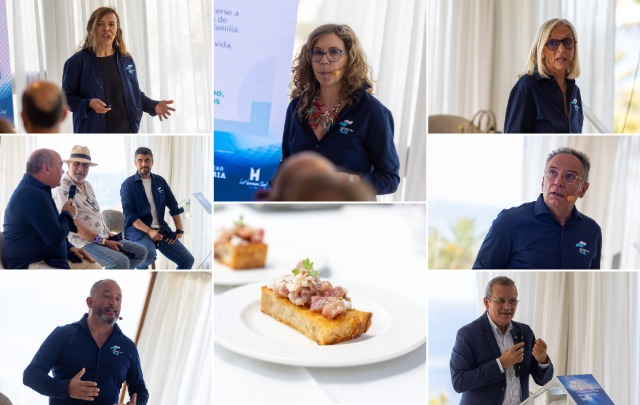
Tenerife wraps up the 8th Meeting of the Seas with a resounding message: “The sea is worth so much more alive than dead”
News
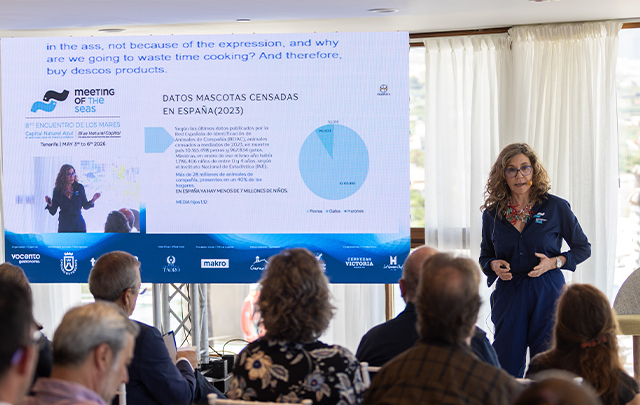
The Challenge of Fish on Spanish Tables: María Luisa Álvarez’s Call to Revive the Culture of the Sea
News

Ciguatera: An Emerging Threat in the Canary Islands
News
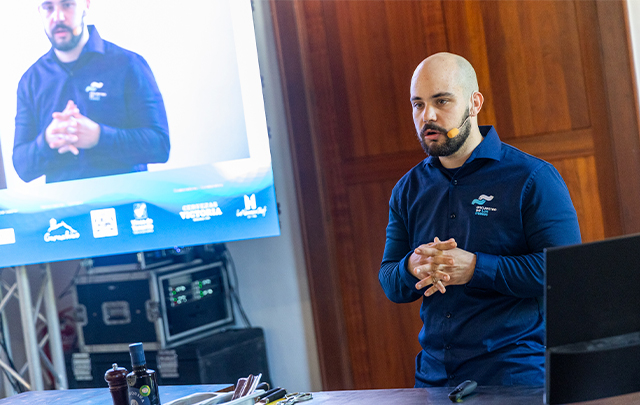
Rethinking the taste of the sea through memory and sustainability
News
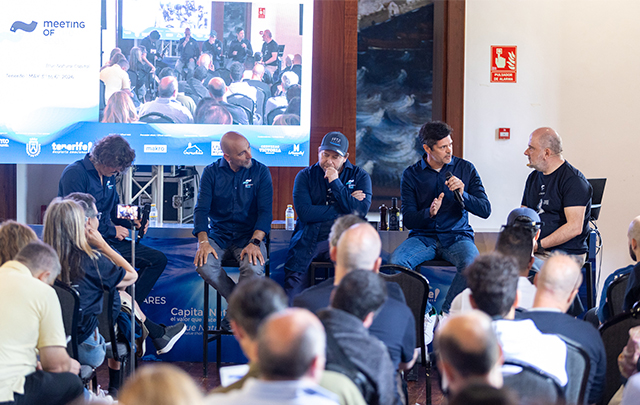
New horizons in seafood cuisine: authenticity, sustainability, and creativity from the Atlantic to the Mediterranean
News
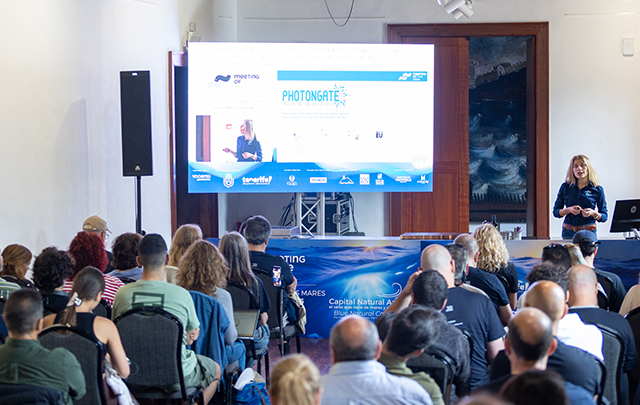
The Science Behind the Taste of the Sea: Ana Fuentes and the Sustainable Revolution in Seafood
News
The 8th Meeting of the Seas calls for putting a price on the value of marine life in order to protect it
News
The luxury of simplicity
News
Alexandre Couillon: the memory of the sea on a plate
News